Nebrodi wines: history, terroir, grape varieties and the future of a thousand-year-old wine-growing tradition

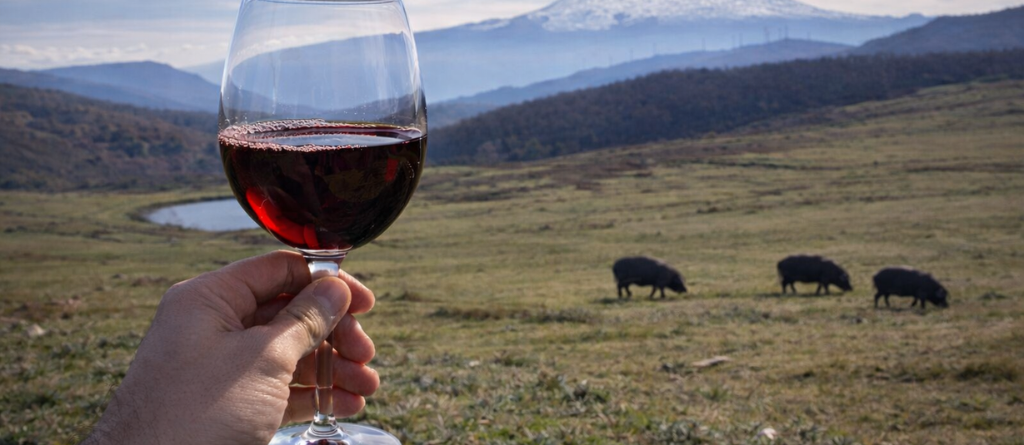
Talking about Nebrodi wines means entering a less ‘obvious’ Sicily: not only sea and sunny plains, but also mountain ridges, forests, springs, temperature variations and viticulture often fragmented into small plots. In this context, viticulture in the Nebrodi Mountains has ancient roots and is currently undergoing a phase of identity reconstruction, with growing interest in local grape varieties and a more conscious territorial narrative. In this article, we will explore the historical origins, environmental characteristics, native grape varieties, organoleptic characteristics of the wines and future prospects linked to the Nebrodi DOC project.
The Terroir of the Nebrodi Mountains: Soils, Climate and Environmental Conditions
The Nebrodi area coincides with one of the main mountain ranges in northern Sicily and includes the largest regional protected area on the island: the Nebrodi Park, established in 1993, covering over 86,000 hectares.
From a wine-making perspective, the first key word is altitude. The highest peak in the area, Monte Soro, reaches 1,847 metres above sea level. In viticulture, altitude (and the resulting lower temperatures, especially at night) is often associated with slower ripening, better preservation of acidity and more “tight” and fresh aromatic profiles.
The second keyword is rain. Technical descriptions of the Nebrodi mountain range indicate average annual rainfall of around 1,000 mm and above. In practical terms, this water availability sets the Nebrodi apart from many other drier areas of Sicily and influences agronomic choices and vineyard management.
The third keyword is geology (and, therefore, soil). The area has considerable geodiversity: in the western part, sandstone and clay outcrops prevail, while in the central-eastern area, sandstone also appears.
Origins of Viticulture in the Nebrodi Mountains: from Greece to the Modern Age
Viticulture in Sicily is widely recognised as ancient: technical documentation reconstructing the island's wine-making history refers to archaeological finds (wine containers, coins with Dionysian figures and other material evidence) and Greek and Latin literary sources that refer to Sicilian wines. In the same context, it should be noted that during Greek colonisation (8th–3rd century BC), vineyards flourished, with developments in grape varieties and agricultural practices supporting structured wine production.
For the north-eastern area, historical sources and institutional reconstructions report that a wine linked to Haluntium (now identifiable with the area of San Marco d'Alunzio) was appreciated in Roman circles: an indication of the quality achieved by some local products even in ancient times.
Among the most fascinating examples of viticulture in the Nebrodi Mountains are the rocky terraces: facilities with tanks carved into the rock for pressing and managing the must. Their presence is a strong indicator of productive landscapes linked to vineyards and ancient winemaking practices. In comparative studies on wine presses in Sicily and the Mediterranean area, the presence of a manual lever press has been linked to very ancient models, already known since the Bronze Age. A concrete example that can be visited is documented at Tripi, where a wine press has been found, restored according to Roman construction methods, with a lever press and oscillating fulcrum.
When recounting the origins of viticulture in the Nebrodi Mountains, it is also worth looking at the coastal strip that lies at the foot of the park. In this context, Capo d’Orlando — a coastal town overlooking the Tyrrhenian Sea and naturally connected to the Nebrodi hinterland — plays an interesting role as a place of passage and cultural stratification. The area corresponds to ancient Agatirno (Agathyrnon), a city founded, according to tradition, around the 12th century BC. In the district of Scafa, a name that recalls the Greek term skaphé (tank), there are other rock wine presses consisting of pairs of tanks carved into the rock, used for pressing grapes and collecting must. The very name of the place therefore preserves the memory of its productive function.
In Dionysiaca, an epic poem dedicated to Dionysus, we read: “Bacchus in saxo duro cava recessus acuto ferro sculpsit et pressit uvas; in petra viva lenonem formavit mustumque in gemina fovea recepit.” that is “Bacchus carved recesses into the hard rock with a sharp iron tool and pressed the grapes there; he shaped the vat out of the living stone and collected the must in a double cavity.” Despite its poetic nature, this passage evocatively recalls the practice of rock wine presses, where the rock itself becomes a tool for winemaking. The same poem also recounts that Dionysus was born in Sicily, in a cave “crowned by a stone vault”. In this context, the Rocca della Sciamma, a place name that means “fortress of the cave” (from the Greek skámma), located on the southern slopes of the town of Capo d'Orlando, takes on particular significance. It is a cavity carved into the rock that contains two vats carved directly into the stone, under the natural vault that crowns the cave: one for pressing the grapes and the other for fermenting the must.
Alongside productive archaeology, a symbolic level also emerges. Several towns in the Nebrodi area have yielded coins depicting Dionysus/Bacchus or figures from his retinue, a sign of the cultural roots of the cult of the god of wine. The name “Nebrodi” has also been interpreted in relation to the epithet Nebródes, attributed to Dionysus and linked to nebrós, the fawn, a sacrificial animal in Dionysian rites. The Nebrodi mountains become not simply “mountains of fawns”, but “mountains of Bacchus”, a territory in which the cult of wine would have had a particular centrality.
Another recurring theme, even in local narratives, concerns the use of terracotta containers. Near the rock wine presses, amphorae for commercial wine transport and dolia for fermentation and storage have been found. Technical and archaeological tradition often refers to large terracotta containers, sometimes partially buried, also to stabilise the temperature during fermentation, a delicate phase of winemaking.
Nebrodi grapes: the most widely grown varieties
When discussing Nebrodi grapes, two names stand out in particular in shaping the wine identity of Messina and the Nebrodi area: Nocera for reds and Catarratto for whites.
The Nocera is a black grape variety traditionally linked to north-eastern Sicily. Documentation reconstructs its important historical presence in the Messina area and, in particular, in the Milazzo plain, where sources from the 19th and early 20th centuries report it as the dominant grape variety before a gradual decline. Today, its presence is very limited, but this scarcity is also part of its value: in a wine-growing landscape dominated by varieties covering thousands of hectares, Nocera retains an almost artisanal and territorial dimension. From an agronomic and oenological point of view, Nocera requires conditions that allow for complete but not excessive ripening, with a balance between sugars and acidity. The Nebrodi mountains, thanks to their hilly and mountainous terrain and less extreme temperatures compared to other areas of Sicily, favour slower and more gradual ripening. The cooler nights help to preserve acidity and define the aromatic profile, avoiding excessive ripening that could weigh down the wine. In this context, Nocera can produce wines with an intense but not overly concentrated colour, with delicate and persistent aromas and a clearly perceptible freshness and sapidity. The balance between structure and acidity becomes the most interesting stylistic feature.
The Catarratto It is one of Sicily's most important white grape varieties and represents a cornerstone of regional viticulture. However, in the Nebrodi Mountains, it takes on a different character compared to the warmer, flatter areas of the island. While in other contexts it can produce softer, more mature wines, here the altitude and temperature variations help to preserve acidity and tension on the palate. The good water availability in the Nebrodi area, combined with the variability of the soils, allows for more regular ripening, limiting extreme water stress. The result, in the best interpretations, is a Catarratto with a bright colour, with aromas of white fruit and citrus, sometimes accompanied by light floral or herbaceous nuances. On the palate, the acidity is more lively and the sapidity more evident than in many versions from the plains, offering greater verticality of flavour. The versatility of the grape variety also allows for different styles to be produced, from fresher and more immediate vinification to versions with greater complexity, especially when old vines or plots located at higher altitudes are used.
DOC Nebrodi Project and future prospects
In 2025, the revival of Nebrodi wines found concrete form with the presentation of the project DOC Nebrodi at Vinitaly of Verona. This is not just a promotional event, but the start of a process aimed at giving legal status and identity to a wine-growing region that has been producing wine for centuries without having its own designation. The initiative is promoted by theAssociazione Cantine dei Nebrodi, chaired by Nino Lenzo (founder of Lenzo Winery), which brings together various producers in the area with the aim of building a shared path. The goal is to obtain recognition as a Controlled Designation of Origin (DOC) capable of clearly defining the geographical area of reference, the permitted grape varieties, the production yields and the winemaking methods most consistent with the vocation of the Nebrodi territory. The idea behind the future DOC is to strengthen the link between the environment, history and contemporary production. The Nebrodi Mountains are not only an agricultural area, but also a cultural landscape that preserves tangible traces of its wine-making tradition. At the same time, the project looks to the future. In a market that is increasingly attentive to origin and sustainability, a dedicated DOC could offer greater recognition to Nebrodi wines, stimulate investment and encourage the recovery of vineyards that are currently marginal or abandoned. The designation would thus become a tool for protection but also for development, capable of consolidating a territorial identity that has remained partly dispersed until now.